Short answer: the best app to hire a handyman depends on the job. For a small, standard job like mounting a TV or putting furniture together, TaskRabbit fits best: you book someone by the hour, with a one-hour minimum, and pay its service fee and Trust & Support fee on top of their rate. For a bigger job you want priced first, Thumbtack and Angi get you quotes from local businesses. On GigNGo you post the job free and locals near you offer. You see each one's name, town and work on video before anyone comes to your door.
The thing people are usually looking for when they search this is an Uber for handymen — tap, someone arrives, done. That does not exist, and understanding why explains the difference between every app on this list.
The three models, and only three
Every app in this category works one of three ways. Which one it uses decides what happens after you press the button, and it is rarely stated on the homepage.
| Model | What happens after you post | Who pays, and how |
|---|---|---|
| Lead marketplace Angi, Thumbtack |
Your request is sold to several businesses, who then contact you. Expect multiple calls, quickly. | The contractor pays for your contact details, whether or not you ever reply. That cost is in the quote. |
| Managed booking TaskRabbit, Handy |
Closest to what people imagine. You pick a time and the platform assigns or lets you choose somebody. | You pay through the app, which takes a service fee on top of the hourly rate. |
| Open board Nextdoor, local Facebook groups, GigNGo |
You post, and people nearby respond to you directly. You choose. Nobody is assigned. | You pay the person. No cut on the work itself. |
Why there is no Uber for handymen
A ride is an interchangeable product. Any competent driver in a clean car gets you there, so an algorithm can assign the nearest one and nobody minds.
Home work is not interchangeable in that way. The jobs vary enormously, the price cannot be known before somebody sees it, and — the part that actually breaks the model — you are deciding whether to let a specific person into your home. Nobody wants a stranger assigned to that. Managed platforms get closest, and they get there by narrowing the catalogue to standardised tasks: mount a TV, assemble furniture, hang a shelf. Ask for something unusual and you are back to describing a job and waiting for a human to read it.
The practical version: if your job is standard and small, a managed app really is the fastest route. If it is odd, or big, or needs somebody to look at it first, the button you are hoping for does not exist on any of them.
What to check before you commit to any of them
Who actually gets checked
Screening badges are the most misread thing in this category, because the check usually follows the account rather than the person. On Angi and Thumbtack the background check covers the business owner; the crew who turn up were checked by nobody. TaskRabbit is the exception — Taskers are individuals, so the person checked is the person who arrives.
We check nobody at all. Locals verify a phone number and that is the whole of it, which is less than any of the above. We would rather you know that now. The full comparison is here, quoted from each company's own documentation.
What it costs you indirectly
On a lead marketplace the contractor has paid for your contact details before speaking to you, and pays again for the next homeowner. That cost lives inside the quote. It is also why you get several calls within minutes of posting — the lead was sold several times.
Whether you can get the same person again
This matters more than almost anything else and nobody advertises it. The whole point of finding somebody good is calling them next time. Managed platforms assign work and some actively discourage taking a relationship off-platform; lead marketplaces make their money on the next search rather than the last hire. If having a regular person is what you are after, check whether the app lets you keep one.
How to get a decent outcome on any of them
- Describe the job like you would to a neighbour, and include a photo. Most of the delay in this process is people asking each other clarifying questions.
- Ask who is actually coming. The single most useful question, and hardly anyone asks it. Get the name of the person, not just the company.
- Get scope and price in a message before anyone starts. Most billing disagreements are two people remembering one conversation differently.
- Look at work they have really done. A photo or a video of a finished job tells you more than a star average, and it is much harder to fake.
- Check any licence claim yourself, on any platform, if the work needs one. Two minutes on your state board. No app does this for you as reliably as its badge implies.
What a handyman job actually costs
Most app comparisons will not tell you a price, because most of them do not have one — a lead marketplace never sees what the job settled at. We do, because the budget is attached to the request. These are median budgets from real jobs posted on GigNGo, with the sample size next to each one so you can judge how much weight it carries. They are budgets at the point of posting, not invoices, and the samples are small.
| Job type | Median budget | Typical range | Jobs |
|---|---|---|---|
| Handyman services | $200 | $70–$250 | 22 |
| House cleaning | $200 | $150–$250 | 30 |
| Moving help | $150 | $120–$250 | 42 |
| Lawn care | $145 | $45–$200 | 11 |
| Furniture assembly | $130 | $100–$200 | 11 |
| Snow removal | $100 | $60–$225 | 7 |
| TV mounting | $60 | $50–$135 | 9 |
| Lawn mowing | $60 | $35–$160 | 11 |
The number that moves most between apps is not the job price, it is what gets added to it. A managed booking app adds a service fee and often a booking fee on top of the worker's rate. A lead marketplace charges the worker for your contact details whether or not they win the work, and that cost has to come back out of somebody's quote. An open board adds nothing to the job itself.
Live figures, updated as jobs are posted, are on the cost guides; the worker-side view of the same data is on what locals earn. If you have a quote in hand and want to know whether it is reasonable, the fair quote checker compares it against this data.
Which to use
- A standard small job, and you want it done this week: a managed booking app. You are paying a service fee for the convenience of not managing it, and that is a fair trade.
- A big job where the price genuinely needs quoting: get several quotes, from wherever. Just be ready for the phone to ring repeatedly if you use a lead marketplace.
- You want somebody you can call again: the open-board model, or a recommendation from someone nearby. That is what "having a guy" actually is, and no assignment algorithm produces one.
Frequently asked questions
Is there an app like Uber for handymen?
Not really, and the reason is structural. A ride is interchangeable, so an algorithm can assign the nearest driver. Home work is not — jobs vary, the price often cannot be known until somebody looks, and you are deciding whether to let a specific person into your house. Managed platforms get closest by narrowing to standard tasks like TV mounting and furniture assembly.
What is the best app to hire a handyman?
It depends which of the three models suits the job. For a standard small task this week, a managed booking app is fastest and you pay a service fee for that. For a big job needing a real quote, get several. If what you want is somebody you can call again, an open board or a local recommendation beats any assignment algorithm.
Do handyman apps run background checks?
It varies, and the check usually follows the account rather than the person. Angi and Thumbtack screen the business owner, not the crew who turn up. TaskRabbit screens individual Taskers, so the person checked is the person who arrives. We check nobody — locals verify a phone number and that is all.
Why do I get so many calls after posting on a handyman app?
Because on a lead marketplace your request is sold to several businesses at once, and each has paid for your contact details. That is the model working as designed. It also means the cost of buying your details is inside whatever they quote you.
Can I hire the same handyman again through an app?
Check before you commit, because it varies a lot and nobody advertises it. Managed platforms assign work and some discourage taking the relationship off-platform, while lead marketplaces earn on the next search rather than the last hire. If you want a regular person, that is the feature to look for.
Watch how they work before they come over
Before you let a handyman into your home, it helps to see them on a job. These clips were posted on GigNGo by the locals who did the work. GigNGo doesn't run background checks, and a clip isn't one: it shows how someone works, not who they are. Where your state licenses this work, check the license too.

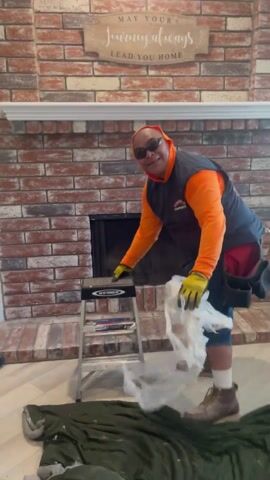 Before
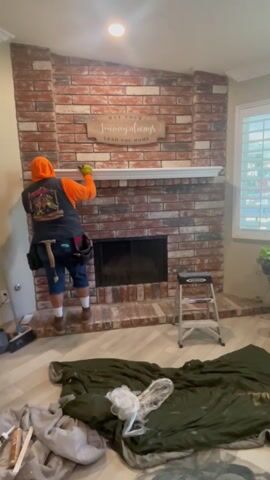 After
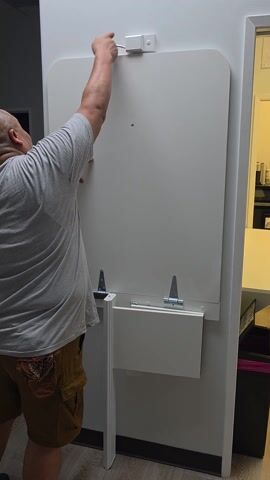 Before
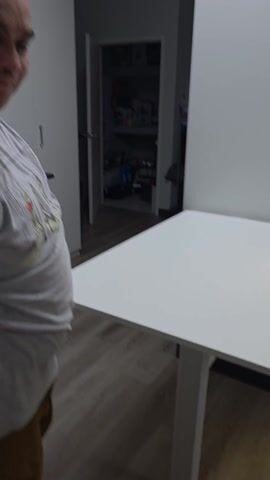 After